Showing posts with label history. Show all posts

Monday, July 26, 2010

Story of the Other Side

Lin Yulan had good reasons to pronounce her whole life a failure.

Her revolutionary course with the nationalists in pre-communist China, to which she devoted the heyday of her life, was denounced and forgotten in her homeland once the communist party won the civil war. She fled to Taiwan, along with other nationalist elites. Personally, the man she married to cheated on her throughout their marriage, no matter in Guangzhou or Taiwan. Worst of all, amid the chaos and despair right before they fled the mainland, her only son wandered away in the city of Guangzhou, never seen by his parents again.

Lin Yulan is one of the characters in a newly released novel, A Thread of Sky, written by Chinese American writer Deanna Fei. Although not the leading role in the novel, Lin’s story is particularly touching to me, because it made me realize that something is missing, on the part of mainland China, in the representation of last century’s revolution.

Growing up in the mainland, I have known the nationalists almost always as the bad guys, while the communists the good ones, in all kinds of representation of the revolution—novels, movies, television dramas, children’s stories, etc, with Mr. Sun Zhongshan (Sun Yat-sen) being the only exception. Occasionally, the nationalists are portrayed as heroes, but usually only when they cooperated with or joined the communists. I never got to know how it was like for the individuals who belonged to the other camp, what they experienced, how they felt, and what they had to tell.

Lin Yulan’s story somehow became my first chance to gain some insights. Born and raised on the mainland, Lin rose from the countryside to join the nationalist revolution, fighting for women’s equal rights. Qiu Jin, the legendary female revolutionary who sacrificed her life to overthrow the rule of the Qing court, was Lin’s idol.

I found Lin’s passion and dedication just as strong as her communist counterparts depicted in stories popular in the mainland. They might have served different party, but they had the same goal of liberating Chinese women from cruel depression and above all, to change China.

Lin’s story is also the first one that shows me the personal distress and pain experienced by the nationalists when escaping the mainland. It was chaos, fear, and misery. Mainland stories never gave much attention to the kind of human suffering the other side lived through.

The corruption of some nationalist officials notwithstanding, thousands of individuals like Lin in the nationalist party fought, died and shed blood for the revolution: first to overthrow the Qing ruling, later to defend the nation against Japanese invasion. Their life, their struggle, their pain and sacrifice should also be recognized and remembered in mainland China, as have been done with stories of communist revolutionaries.

As mainland cultural workers increasingly try to move the focus of narrative from prominent historic figures to ordinary individuals in the communist camp, more similar stories should be devoted to the nationalists as well. The commemoration of the revolutionary achievements of the nationalists should not be limited to showing the giant portrait of Sun Zhongshan on the Tiananmen Square during the October 1 national holiday. The younger generations of China deserve to know a more accurate and complete version of the revolutionary history. To quote from the novel, “But her [Lin Yulan’s]sacrifices, even forgotten, had made a difference.”

Related article: 

For a Chinese-American Writer, Split Images of China

Friday, January 19, 2007

Who Killed Revolution Heroine Liu Hulan?

A statue of Liu Hulan


A university professor’s unconventional explanation of a young revolution heroine’s death caused a lot of controversy in China’s public discourse this week, which has gone beyond just the debate over historical facts and become a clash of ideology, between alleged iconoclast of a classic communism paradigm and the defenders.

The heorine under debate is Liu Hulan, a 15-year-old girl killed by the Kuomintang army during China’s civil war in 1947, for refusing to identify communist party members in her village. She herself was a communist party follower at that time. Since the establishment of People’s Republic of China, Liu Hulan has been a revolutionary icon in China’s official teaching, especially as a paradigm of bravery and selfless devotion for young people.

Her story is a must-read in elementary school textbooks, according to which she was beheaded by Kuomintang soldiers. But in a blog post, Zhou Yijun, also known as A Yi, a famous TV host and professor at Peking University, claimed that Liu Hulan was beheaded by her fellow villagers.

“Liu Hulan was not beheaded by National Revolution Army [Kuomintang army]. In stead, they [Kuomintang soldiers] hit several villagers with gunstock and forced them to behead Liu Hulan. Terrified and trembling, the villagers beheaded the little girl growing up under their own watch,” A Yi wrote in the blog post. He also revealed that some of these villagers later lost their minds, and some were punished after the People’s Republic was established, but “the truth” was completely excluded in the government’s propaganda of Liu Hulan.

A Yi wrote the post on Jan.12, the 60th anniversary of Liu Hulan’s death, talking about a TV show he once hosted. In making the program, which reviewed historical events, the crew went to Liu Hulan’s hometown, interviewed a few old villagers and got the story very different from what people were taught. The piece was not aired.

Three days after it was posted, the article received more attention as well as criticisms after Xinmin Evening News, based in Shanghai, reported it.

Li Yang, an commentator writing for Huayue Forum website, called A Yi’s article the “counterattack of China’s revolution.”

He said A Yi and a group of scholars at Peking University are trying to completely deny China’s revolution, and “systematically and completely deny everything of the Chinese Communist Party.”

Why would they do that? “Very simple,” Li Yang writes. “Denying the past is denying the present, and therefore denying the legitimacy of the ruing communist party, which inherited the heritage of the past.” Eventually, according to Li Yang, they would like to drive the party out of office and push forward multi-party politics.

The party’s propaganda organ won’t keep silence, either. On Friday, the People’s Liberation Army Daily published an article denouncing A Yi’s story as “simply a farce of distorting truth and overturning classics.” The paper sent a correspondent to investigate A Yi’s program’s investigation, who found that the crew did not really talk with the only two living witnesses of Liu Hulan’s execution. The correspondent, however, did talk with the two witnesses who said Liu Hulan was killed by Kuomintang soldiers.

A Yi’s blog article received more than 200,000 hits, but online comments about it are almost unanimously unfavorable. People are not happy to see the glory image of the heroine be doubted or tainted. A few voices supported the professor, like the one criticizing the PLA Daily’s articles as suppressing different voices over historic events.

The controversial article has been removed from A Yi’s blog, but is still accessible on other sites that copied and pasted it.

----by Josie Liu

Monday, October 16, 2006

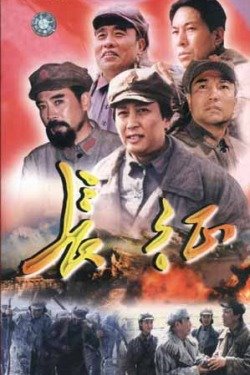
Memorizing the Long March


Late leaders Mao Zedong, Zhou Enlai, Zhu De, Liu Shaoqi, featured in a Long-March movie poster


The Chinese government has launched various activities across the country to mark the 70th anniversary of the successful completion of the Long March, a master piece in the history of the communist-lead revolution in China in last century.

The Red Army started the Long March in October 1934, to evade massive attacks from the Nationalist army. They marched thousands of miles across China from east to west, sustaining battles, heavy casualties, famine, wounds and illness, walking through some of the cruelest conditions such as snow mountains and swamps, till they finally accomplished the mission in 1936.

President Hu Jintao visited an exhibition on the Long March in Beijing on Monday. He urged people to remember the great achievements of the revolutionary generation, and inherit their legacy in the current course of building the country, Xinhua reported.
http://news.sina.com.cn/z/changzheng70/index.shtml


Janitors Went on Strike Due to Low Pay
More than 100 city janitors in Lanzhou, Gansu, did not go to clean the streets on Monday, in protest against their under-minimum wages, Western Economic Daily reported.

The province, for which Lanzhou is the capital city, increased its monthly minimum wage to 430 yuan (about $54) in August, but some of the city janitors received only 360 yuan ($45) in October. These workers are mostly hired contemporarily. City government cited financial difficulties for the low payment. Labor Union in the city has pledged to investigate and resolve the problem.
http://news.sina.com.cn/c/2006-10-17/012910249141s.shtml

----by Josie Liu