A famous reporter in China once told me: China is a country where truth is in short supply. Well, until weibo came along.
Weibo is
the Chinese name for mircoblog. The most popular microblog service in
China right now is the one provided by sina.com, or Sina Weibo. Weibo is
a concept borrowed from Twitter, which is not accessible in China.
Adopting Twitter’s standard, posts on weibo cannot exceed 140 Chinese
characters, which actually account for more words than do English
letters of the same amount. With 140 Chinese characters, roughly 70
words, a weibo post can express a lot.
The China unveiled on
weibo is very different from the one presented in any traditional media
outlet in the country. Weibo carries facts and opinions one can never
see in traditional media, because weibo, which is open to everybody who
can get online, is not so tightly controlled by China’s propaganda
authorities. Despite rumors that the authorities may shut it down
completely someday, so far, weibo is alive and well.
Weibo thus
has become the platform for whistleblowers to reveal official
corruption, for people to criticize the government or simply express
opinions that might otherwise be silenced. As such, weibo also has
become a window through which one can see China from a very different
perspective.
Starting this week, I will choose on a rather regular
basis interesting stories, debates and phenomena that I spot on Sina
Weibo and present the information through multimedia.
This first
episode is about Lei Feng, a national icon died 50 years ago, and how
people use weibo to articulate different meanings of this icon than
those presented in state media.
The New York Times published an article on March 5 on the same topic.
Generally speaking, the 2010 Nobel Peace Prize Laureate Liu Xiaobo does not have much to do with neoauthoritarianism, except for the fact that the latter is part of the reason that he is in jail.
Briefly, neoauthoritarianism is a political ideology that postulates economic growth under authoritarian rule. This was the ideology that Zhao Ziyang held when he lost the political battle with the hardliners amid the1989 pro-democracy demonstration, as pointed out by Ruan Ming, a former aide to Hu Yaobang.
Dissidents from 1989 often blame Zhao for failing to ally more firmly with the demonstrators and take the initiative of media freedom, thus possibly turn the demonstration into a successful democratic revolution. But if one understands Zhao’s political position at that time, i.e. neoauthoritarianism, one could see that such scenarios were just not going to happen.
For Zhao simply never really believed in democracy or freedom of press. As much as he wanted to liberalize the market, he had no intention to liberalize the political system. Zhao, like pretty much all party leaders, who might have different views regarding how to hold onto the party’s monopoly of power, firmly supported the one-party rule. They don’t believe Chinese people are ready for democracy, free election and free speech. They see political liberalization as simply the cause of chaos and turmoil.
As Liu Binyan, one of the media freedom advocates from the 1980s, stated, China is unique in some way. When the communist regimes in Eastern Europe collapsed like dominos in 1989, the Chinese Communist Party hurried to tighten its grip of power. The entire China was on fire in the spring of 1989, demanding more freedom in politics, thoughts and expression, only to cause the party re-realize that ideological control was the very lifeline of the party rule. Despite the outcry and demonstration from millions of people, including journalists, there turned out to be less, not more, freedom for the media in political discourse.
In other words, people like Liu Xiaobo, who have fought with their lives for democracy and freedom for the Chinese people, keep getting disappointed, or worse, jailed. The answer, at least in part, still lies in neoauthoritarianism.
Zhao Ziyang was down, but the political ideology he was trying to practice is still strongly upheld among the CCP leaders, only that today’s ruling group is savvier in both propelling economic growth and maintaining political control through control of media and expression.
This is not to say that neoauthoritarianism is all bad and evil. Whether China is ready for a political overhaul does merit a big question mark. At the same time, Liu Xiaobo and his comrades deserve all the respect and honor for pursuing their dream of a better country for the Chinese people. But unless there is a substantial number of members of the party elite actually believe in democracy, civil liberty and media freedom, grass-root dissidents like Mr. Liu would probably have to spend more time in jail.
Surprising even to editors at Forbes, Chinese president Hu Jintao is the most powerful person in the world, according to the latest Forbes List.
U.S. president Barack Obama is the second.
The power ranking is based on evaluation of four criteria: number of people under influence, financial resources, powerful in multiple spheres, and active wielding of power. The combination of scores in all four categories put Mr. Hu to the top spot.
In the explanation of Hu's power, the authoritarian nature of the Chinese political system, China's taking over as the world's second largest economy, as well as China's massive foreign currency reserve are the key elements.
Wang Fei performs at the CCTV Spring Festival Gala
The people, the party, the advertisers, all of them need to be pleased, and that’s the mission of the Spring Festival Gala show. By the eve of the Year of Tiger, the job for China Central Television (CCTV) has only gotten tougher. For the past nearly three decades, watching the Spring Festival Gala show on CCTV has become a new custom of Chinese people’s lunar New Year celebration. The show is never pure performing arts, but always carries messages that the ruling party wants to convey to the people, which mostly promotes the legitimacy of the party. But in this year’s show, comparing with those in recent years, the propagandist intention seemed to be more blatant.
Particularly in those group song performances, by singers dressed up in minority outfits, or very old artists dubbed as teenagers, etc., political slogans have been turned into lyrics. A singer in Uyghur costume, for example, sang enthusiastically about the benefits of the newly established rural cooperative health care system. In reality, though, the system is facing all kinds of problems, and exactly how many rural residents are benefiting from it is worth questioning.
In another performance, a group of teenagers expressed loyalty to the party by singing: “without the communist party, there will be no new China”, and “following the community party, let’s build a great China.”
The first line has been the central theme of the party propaganda since the foundation of the People’s Republic, and has become such a cliché that very few young Chinese today would embrace it. But for the purpose of propaganda, sing it anyway. The second line is a relatively new invention, and more or less bears some nationalism sensation, which is gaining popularity among the Chinese youth. In one way or another, the party is trying to fortify its legitimacy in the minds of the entire nation by imposing the message on the performances, rather aggressively.
A show full of political preaching could only annul the intended political messages, of course. So for a better part of the entire gala show, entertainment is still the focus. Super star Wang Fei’s appearance certainly put this year’s show at a high point of China’s pop culture, while the reunion of XiaohuDui satisfied the nostalgia of China's rising middle-class: the generation born in the 1970s.
Meanwhile, putting together such entertainment extravaganza has become increasingly expensive, with ever fancier visual effects, better stage equipments, etc. CCTV therefore had to use the show to serve the advertisers, too. Unlike the Super Bowl broadcast in the U.S., CCTV’s five-hour airing of the gala was commercial free, which left the television station with few choice but to weave product promotion into performances. So actors wore aprons printed with the name of Lu Hua cooking oil, magician LiuQian made a magic with Hui Yuan juice, and an actress in a short drama giving out GuoJiao 1573, a famous liquor, as gifts.
Overall, it’s a tough job for the gala to appeal to everybody. After all the extravagance was over, however, people would keep talking about those entertaining or nostalgic moments, while forget those propagandist messages pretty quickly. Chances are, people would remember GuoJiao 1573 better than the success of the rural health care system.
traditional houses struggling to survive in a fast modernized city, Kunming
During my visit to China at the turn of the year, I had some interesting observations as well as experiences, and decided to document some of them.
Something New
The first time I finished a degree in the US and returned to China to find work, people in Beijing mostly showed admiration of my American education. I did get pretty good jobs and felt good of myself. That was in 2004. This time around, however, things were very different.
It seems like the ego of Chinese people has grown bigger over the years. They no longer look at people returning from overseas with high regard. On the contrary, they are more into reminding America-educated people that “not everything in the US is right.”
While visiting different cities and talking to different people, for a few times when I tried to comment situation in China by comparing with the US, I sensed resistance from the person I was talking to. So I started to avoid talking about America, unless I was asked about it, which also happened less frequently than five years ago. And frankly, to me, it was more interesting to hear people talking about what they were doing and what was happening in their life in China, than me telling them how things were in the States.
Something Unexpected
I have a few friends in Kunming who have been pretty well established: having decent jobs, getting promoted, and owning houses and cars. All in their thirties and college educated, they’re promising professionals: physician, court clerk, engineer, and accountant. Some of them work for government-related companies. They don’t deny that the single party ruling system has problems, but agree with each other that American-style democracy will not make things better in China.
“We all support the Communist Party,” they say. Millions of people who work directly or indirectly for the government feel the same way, they say. China is doing just fine, despite criticism from other countries, and they don’t want things to change too much.
What about human rights? What about corruption? Well, China is not perfect, they say, but neither is any country in the world. Besides, Chinese people are living a better life than people in many countries such as India or North Korea, in their view.
Having read a lot of news in western media, I’ve got the impression that China is full of crisis. But looking at and talking with people there made me realize that the CCP still has very strong appeal among Chinese people. Young professionals like my friends don’t like everything the party does, but certainly don’t want political overhaul in China.
After all, under the party’s rule, they have established their career, family and a good life. They don’t have that much demand for democracy, at least for now.
Something Impressive
two new houses built right next to each other, Xichuan
vendor-packed street in Xichuan
At least two things impressed me during this trip.
Supermarkets in Kunming, Yunnan no longer provide plastic bags for shoppers. People either have to purchase reusable bags, or bring their own. This is part of the effort pushed by the Kunming government to turn the city into an environment-friendly city. I’m impressed by the decisiveness and effectiveness of the government’s initiative.
Another thing impressed me was the chaos in a small town in Henan. Home to nearly 200,000 people, the rural town of Xichuan was a mess. Increasing number of cars packed in the streets, not stopping for pedestrians, not even for red lights. Everybody fought their way to move ahead, regardless of the traffic rules, as long as they didn’t kill each other. Multi-floor buildings were being built wherever they could set a foot on. They stood only an arm’s distance to each other, made already narrow allies even narrower, and turned the town into a dirt covered ghetto.
But what really impressed me was not the mess of this place, but its dynamics. Despite lack of order, this place was full of energy of growth. People were eager to make more money and enjoy better material life. More than once while I was walking in the streets, a door opened beside me and l saw a few women sitting in a narrow room weaving rugs, which was one of the newly developed business in the town. Stores of all kinds were everywhere, mostly individual owned. Many of them selling all kinds of household stuff for just 2 yuan each (30 US cents).
People were complaining about the chaos and the dirtiness, but continuing to do their business and make their living, full of enthusiasm, full of hope.
Something Astonishing
The sky-high real estate price in China is insane. In Beijing, everybody was telling me how housing price has doubled, tripled, or gone tenfold over the past decade. When I was working in Beijing in the early years of the 21st century, the price of 3000 yuan (US$440) per square meter sounded pretty high already. And today, one can barely find any property that’s below 10000 yuan (US$1470) per square meter.
I heard similar story in Chongqing and Kunming. Some people say there is huge bubble in China’s real estate market and the market will collapse some day, others believe the price could only go higher.
For people like me who are still studying overseas, such high housing price could well scare us away from returning to China to work after completing education. Like one lady recently returned to Beijing from the US told me: “a city like Beijing is no longer livable” because of the appalling real estate price.
Something Unchanged
a popular restaurant packed with eaters in Kunming
People. I mean, the amount of people. Having lived in the States for a few years, I have grown used to doing everything by myself: adding gas, filling out forms at the bank, throwing away trash when finish eating in a fast food restaurant. But in China, where there is always a labor surplus, there is always someone there to do things for me as a customer.
At the bank, despite the fact that I do read Chinese and understand how the number vending machine works, which is really simple, there is a clerk standing right beside the machine to press the button for me and hand me my waiting number. Similarly, in pretty much every fast food restaurant, McDonald’s included, there is someone collecting trash after a meal is finished.
It has always been like this, and I think it will continue to be this way. For better or for worse, average Chinese consumers receive more service on a daily basis than American consumers.
Victor Navasky, the Director of the Delacorte Center for Magazine Journalism at Columbia University and chairman of the Columbia Journalism Review, recently talked with me about his trip to China last year.
Navasky went to China to celebrate the launch of the Chinese edition of the CJR, which was his first visit to the country.
While driving into Beijing, Navasky says he got the sense of a modern city filled with glass buildings, which “struck me as more modern than New York City.”
The next day, he discovered that just a couple of blocks away from the very modern city where his hotel was located, was the Forbidden City. Then he got a chance to visit the Great Wall, and saw pictures of poverty on the outskirts of Beijing. “It is the contrast that sums up the society,” Navasky says.
Besides the modernity and sharp contrasts in Beijing, Navasky says he was also surprised by two political phenomena. He had assumed that Chinese people would view America as the enemy. “But what I left with was the impression that Japan was still the enemy,” he says. During last year’s trip, he also visited the Nanjing Massacre Museum. “It is as powerful as the Yad Veshem, the Israeli museum of the Holocaust,” he says. “I would hate to be a Japanese person going through there.”
The second surprise had to do with mainlanders’ attitudes toward Taiwan. “I just assumed that the attitude towards Taiwan would be like the Miami Cubans’ attitude toward Castro’s Cuba, that they want nothing to do with it, that it is an illegal, undesirable society,” Navasky says. Once he was in China, he soon realized that was not the case. Instead, he said he saw a very active exchange, cultural and personal, between Taiwan and mainland China, with political disagreements.
Navasky, 77, is also the publisher emeritus of The Nation, for which he served as an editor and publisher for many years. See the full article on China Digital Times.
The coverage of the 17th Party congress is very red
Despite extensive coverage in China’s news media of the 17th National Congress of the Chinese Community Party, discussion of the reshuffle among top leaders is absent, although it has been the focus of foreign media’s coverage of the congress.
Xinhua.com and sina.com.cn, tow of the biggest online news venues in China, both carry special sections for the congress with abundant stories about the main sessions, side lines as well as representatives. Almost all of the stories, however, focus on singing praise of the Party’s achievements in China’s development in the part five years.
Public online comments, that is, those there are allowed to stay, follow the same tone, as demonstrated on Xinhua and Sina BBS. There are some sketchy mentioning of environmental problems and the income gap among people’s comments, but are mostly with a mild tone or uttering hope and support for the Party’s “wise decisions” to solve them.
The permitted theme of the coverage, including commentaries, across the board of Chine’s media is clear: celebrating, supporting and strengthening the rule of the Party.
There is no report or comment on one of the congress’ most important issues, personnel change among the top leaders, particularly the new politburo, on China's major news websites or BBS, at least so far. On one of the most popular Chinese public forum, tianya.cn, there is even no post about the congress at all. As a matter of fact, Tianya has banned since last month all posts regarding Party and national leaders and other political issues.
The silence suggests the sensitivity of the personnel issue, and the Party’s extreme caution in controlling public discourse of this matter in China. Unlike during the National People’s Congress earlier this year, the week of the Party congress is not so much a time for the public to voice concerns, debate policies and suggest solutions.
One of the few negative, sort of, messages stands out among the overwhelming positive reflections is anti-corruption, something the current leadership has vowed to contain.
Top leaders of the Chinese Communist Party have decided to expel former Shanghai leader Chen Liangyu from the Party, and transfer his case to judicial departments, Xinhua reported today.
After almost a year of removing Chen from his official posts due to alleged corruptions, the Party finally announced such resolute handlings of Mr. Chen, and sent out a clear and loud anti-corruption message just a couple of months before the opening the 17th national convention of the Party.
“Anti-corruption struggle concerns wining or losing public support, the life and death of the Party, and the long period of peace and stability of the country,” Xinhua quoted an announcement released by the Party. “Within the Party, [we] need to make sure that at any time, no matter who, no matter how high the office, as long as someone violates the Party principles and the law, he will be seriously investigated and severely punished.”
The Party’s central disciplinary commission has found Chen Liangyu corrupt in many ways, including supporting illegal loaning of Shanghai social security funds to individuals and companies and therefore jeopardizing the safety of the funds, taking bribes in exchange for showing preference for certain parties when approving projects, as well as abusing his power for sex.
Support for Chen’s punishment has dominated online comments, and many netizens are calling for death penalty for Chen.
When some Chinese people were using the Internet as the platform to voice dissent against the party-rule government, a 23-year-old college graduate posted a long comment on an online public forum, calling on the public to trust the state government, love the country and be unified to build a stronger China.
More comments to this post, however, deride it than support it, partly because web users in China are more used to making or reading criticism than complimentary of the government on the Internet.
The poster, named ShouxiNiuren ("The No.1 Man") on the forum, apparently was prompted to say something after reading too much denunciation of the government on the Internet.
"I just don't understand why we can't face [the government] with a fair attitude," he writes in the post, titled "We Have Reasons to Trust our Country and Government."
To him, it is understandable that there will be all kinds of problems coming up in the development process. He believes that the vast majority of government officials are "truly serving the people," and that China's country leaders could become leaders because "their IQ and capability are absolutely beyond ours."
Some commentators of this post called it sick, blind-talking, and "a nauseating high-school political education text." Another announced, "Only love the country, but not the Party, because there is no way to love it."
People also made their own political statements in their comments. One person made a list of things for the government to do to achieve democracy, including allow free speech, remove party organs from universities to allow free thinking, allow other political parties and universal suffrage.
Those who supported the post said people should be more positive about China's social reality, "in fact, is there any country and society that has no defects?" Others agreed with ShouxiNiuren that those who always condemned the government on the Internet did not have the right view of the country.
Some radicals in China already intended to stir public opposition against the Chinese government via the Internet. In one of the latest incidents, Zhejiang writer ZhangJianhong, pen name Li Hong, "defamed the Chinese government and current social system and incited subversion of the state government" in over 60 articles published on foreign-hosted websites last year, Xinhua reported. On Monday, he was convicted of "inciting overthrow of the state government" and sentenced by a Ningbo court to six years in jail.
Whether or not to trust the government is also an ongoing discussion on other Chinese public forums. On huayue forum, for example, one poster says the Communist Party has been controlled by corrupt officials and some capitalists and lost the support of the people.
"But if we did not support it, who else can we support?" asks the poster, who is concerned that without the rule of the Party, China could be disrupted and fall into conflicts of regional powers.
"So long as it [the Party] holds fast to the interest of the country and the nation, I still don't want it to collapse, until the rebirth of a party that represents the interest of the people."
Pigeons set off at the Tiananmen Square on New Year’s Day
Starting January 1, 61 new laws and regulations, half state laws and half local, took effect throughout the country.
As the New Year began, the Supreme Court took into its hands the final approval of death penalties handed down by lower courts, in an effort to check on wrong cases and the abuse of law in local courts, the People’s Daily reported. Another new legislation is called Anti Money Laundering Law, requiring in financial institutions the establishment of customer identity reorganization, transaction records and large-amount trade report systems, as well as other regulations to help discover and stop money laundering.
A new law strengthening the surveillance power of People’s Congress is also in place. It defines the supervision role of the standing committee of national and local People’s Congress as to be focused on the government, court and procuratorate. Among other tasks, the standing committee shall make sure it looks into government budget and its implementation.
Besides, according to the new Passport Law, starting 2007, it takes 15 days, down from 30 days, to get a Chinese passport. The government took steps to shorten the procedure mostly due to fast growing population traveling overseas. In 2006, nearly four million Chinese people traveled outside the country, while there were only 100,000 off-shore travelers every year in the early 1980s.
In addition, experts from overseas, either Chinese natives or not, will enjoy better treatment at Chinese custom as their luggage will not be routinely checked and some of their belongings will be waived from custom taxes.
People in China noticed that the media have been unusually outspoken lately. An article published in an on-line chat room cited a few examples, including published interviews with human rights activists and dissent academics who are not favored by government censors, and several articles frankly advocating democracy and rule of law, something not very often seen in mainland media.
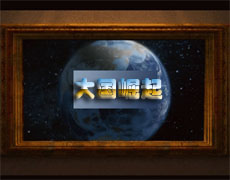
But the most remarkable media event recently is a documentary series, The Rise of the Great Nations, aired on one of China’s major propaganda organs, China Central Television.
The 12 part documentary looked into the rise of nine of the world's main powers, including Germany, Spain, Japan and the United States, over the past 500 years and examined why they thrived. Unlike the Communist Party’s long-time interpretation of history as ruled by class struggles and censure of capitalism, the documentary provided rather objective and factual narratives and analysis, an approach so unusual for CCTV that many viewers said they could not believe the show was produced by the station. Mai Tianshu, one of the creators of the documentary, told a Chinese newspaper that the show aimed at helping the public to understand what is the origin and future trend of modern society, the importance of reason, compromise and cooperation in building a new system, and the necessity of a strong central power.
In the cyberspace and other media, people are comparing The Rise of the Great Nations with another mind-shaking documentary, The Young Death of a River. It was aired on the same station 18 years ago and has been deemed as having fanned the democracy fever among young people and therefore facilitated the demonstration at the Tiananmen Square in 1989. The Young Death of a River, or He Shang, denounced the traditional Chinese civilization, nurtured by the Yellow River, as close-minded and hidebound, and called on the Chinese nation to learn from western society’s “ocean civilization” in order to step up as a modern nation.
Some analysts say that like The River, The Rise foreshadows new moves of political reform, but others say it is just one implement of Chinese leadership’s intention to learn from western society, including its democratic and legal system, in search of appropriate ways for China’s modernization. Still others say the show is a good education for Chinese people, preparing them for China’s rise as a world power.
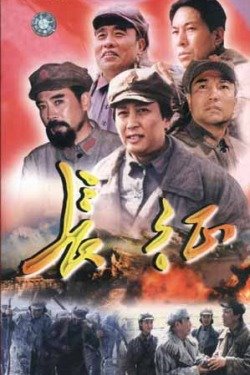
Late leaders Mao Zedong, Zhou Enlai, Zhu De, Liu Shaoqi, featured in a Long-March movie poster
The Chinese government has launched various activities across the country to mark the 70th anniversary of the successful completion of the Long March, a master piece in the history of the communist-lead revolution in China in last century.
The Red Army started the Long March in October 1934, to evade massive attacks from the Nationalist army. They marched thousands of miles across China from east to west, sustaining battles, heavy casualties, famine, wounds and illness, walking through some of the cruelest conditions such as snow mountains and swamps, till they finally accomplished the mission in 1936.
President Hu Jintao visited an exhibition on the Long March in Beijing on Monday. He urged people to remember the great achievements of the revolutionary generation, and inherit their legacy in the current course of building the country, Xinhua reported. http://news.sina.com.cn/z/changzheng70/index.shtml
Janitors Went on Strike Due to Low Pay More than 100 city janitors in Lanzhou, Gansu, did not go to clean the streets on Monday, in protest against their under-minimum wages, Western Economic Daily reported.
The province, for which Lanzhou is the capital city, increased its monthly minimum wage to 430 yuan (about $54) in August, but some of the city janitors received only 360 yuan ($45) in October. These workers are mostly hired contemporarily. City government cited financial difficulties for the low payment. Labor Union in the city has pledged to investigate and resolve the problem. http://news.sina.com.cn/c/2006-10-17/012910249141s.shtml
Millions of people commented on the Internet in the last couple of days, hailing the sacking of Chen Liangyu, former party chief of Shanghai, who allegedly involved in the city’s recent social security fund embezzlement scandal. The Political Bureau of the Central Committee of the Chinese Communist Party made the decision on Sunday to remove Chen Liangyu from office, including his post in the Politburo, and start an investigation on his role in the pension fund scandal. Preliminary investigation showed that Mr. Chen was involved in the embezzlement. He was also found seeking interests for illegal entrepreneurs, providing illegitimate benefits for his relatives, and shielding his staff’s misconducts, Xinhua reported.
The move was to the surprise of the majority of the public. “It’s sudden, but reasonable,” one wrote on the Internet. Most people did not expect such severe punishments for Mr. Chen, who not only had a position in the politburo, but also headed the largest and most prosperous city in China. He was also seen as a member of former Chinese president Jiang Zemin’s clique. Many observers said Mr. Chen’s fall indicated President Hu Jintao’s final take-over of the full power, and the ending of Mr. Jiang's influence on national politics. Others said the move was more than power struggle, but was part of Mr.Hu’s plan to crack down on party and government officials’ corruption, which has been prevalent in almost every government and party branch across China, and deeply rooted in the political system. They saw this move as a hope for restoring a clean, integral political arena.
One observer wrote that Chen Liangyu provided a good opportunity for President Hu to demonstrate that he was willing to remove anyone who committed corruption, so as to admonish other officials. And the timing was good, too. The communist party is expected to go through major personnel changes when the party’s 17th national assembly opens next year. There are speculations that half of the members of the politburo standing committee will retire after the assembly. With a largely new politburo standing committee, which sits at the top of CCP hierocracy, it is easier for Mr. Hu to implement new policies, including a tougher surveillance system to tackle corruptions.
Villagers Confronted Police in Guangdong over Election Fraud Hundreds of villagers from Shadui Township in the Guangdong city of Xinhui surrounded their township government and had physical confrontation with policemen on Wednesday. Some villager were injured and sent to hospital, Hong Kong Cable Television reported. Villagers said the government did not allow them to vote in the People’s Congress representative election because the government and villagers disputed over use of land. A township official confirmed the conflict but said it was only a “small problem.”
Happiness Index Derided by the Public After decades of measuring progress in terms of hard economic data, mainland authorities are set to chart the state of the nation's well-being with the introduction of a happiness index. National Bureau of Statistics chief Qiu Xiaohua said on Tuesday that the happiness index will include people's feelings towards their living conditions, such as income, employment, social welfare and the natural environment, the South China Morning Post reported.
The new move was ridiculed by many on the Internet. One commentator wrote on the Chinese online chat-room Huashan forum that happiness as an abstract concept and could not be expressed by numbers.
Another wrote that feeling of happiness is only a subjective perception, which does no good to reasonable policy making, but instead, would confuse people and be a waste of social resources to do such surveys. “For example,” the commentator wrote, “a bagger got some hot soup in a freezing day would also feel ‘very, very happy.’ This is the so called ‘happy of poorness.’ ”
There are also comments, though not the majority, supported such measurement, calling it a tool to educate people that happiness does not necessarily associate with material and therefore could curb the trend of consumerism in China, which the commentator deemed as having positive impact. http://washeng.net/HuaShan/BBS/shishi/gbcurrent/150711.shtml
“Ten Ugly Quotes of Officials” Censured on the Internet No.1 “Children, don’t move, let the leaders go first.” (An official from local education commission told panic pupils when they were caught in fire in a theater in a Xinjiang city. More than 300 people died, most of them elementary school students in that 1994 catastrophe. )
No.4 “Stop it! I’ve seen too much of this.” (A local government official told a villager who got down on his knees to plea for help from the government in defending his rights.)
No. 5 “China is very safe, no SARS. Welcome to visit China.” (An official from China’ s ministry of public health told foreigners when SARS broke out in 2003.)
No. 8 “I though I’m a pubic official, and all my food, clothing and expense should be provided by the public.” (A corrupted Guangdong official said after being arrested.)
No. 10 “Who asked you to work? You go find them (the employers). The government doesn’t owe you money.” (A government official in Heilongjiang told migrant workers who appealed to the government to help them get their overdue salary.)
On his Anniversary, Mao Zedong is Widely Remembered and Debated, Again The 9th day of September is the 30th death anniversary of the late Chinese leader Mao Zedong. A multi-million museum about him, funded by the government, broke ground on Wednesday and is expected to be finished next year. Some mainland media published articles in his tribute, highlighting his great achievements and positive impacts on China’s history. While commercial websites like sina.com set up a special section to memorize Mao upon the anniversary, state-run news websites like that of Xinhua News Agency and China News Service do not adopt the same approach. Instead, Xinhua’s website set up a special section to memorize the Long March, a milestone movement in China’s revolution in which Mao played a major role. The official sites' downplay of the event indicates that under the intricate situation in current China, talks about Mao’s legacy and influence have become more and more sensitive or tricky and the government is cautious in dealing with the publicity in that regard.
Among scholars and the public, however, Mao is more of a figure of controversy, whose contribution and destruction to China are constantly debated.
Chinese Economy Suffered Great Loss due to Pollution Environmental pollution cost Chinese economy more than US$600 billion in the year of 2004, or 3 percent of the Gross Domestic Product (GDP) of that year, according to China’s first official report on adjusted GDP according to pollution costs. Pan Yue, deputy chief of China’s state administration of environmental protect, said the reported number was only a small portion of the real environmental cost, because technology limitations did not allow more comprehensive measurement, China News Service reported. Mr. Pan warned about China’s environmental crisis and its increasing impact on the country’s economic growth. http://www.chinanews.com.cn/other/news/2006/09-07/786348.shtml
Advertising featuring National Leaders Prohibited The central government has requested local governments to launch an inspection on local retailers’ illegal use of words, names or images of national government officials in promoting their products, Asian Times reported. After earlier crack down, images of China's country leaders are no longer seen on television, print media or billboard advertisements for commercial products, but some stores are still found using such images on site to help boost sales. http://www.atchinese.com/index.php?option=com_content&task=view&id=21792&Itemid=33


 two new houses built right next to each other,